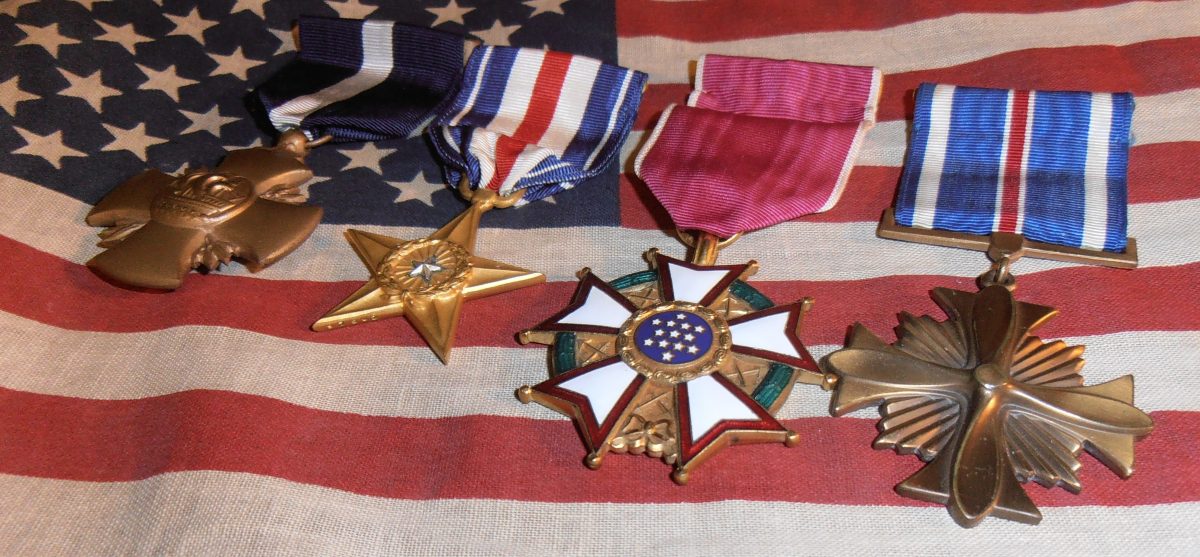
Masters of the Air.

Having not had the good fortune to see the TV series of “Masters of the Air,” I have recently finished reading the book, and what a book it is. 525 pages, including the epilogue and acknowledgements. There’s a further 144 pages of notes, bibliography, and index due to the amount of resource Donald Miller used, some of which I read some years ago. “The mighty eighth” by Gerald Astor being one of them.
The book starts with an introduction to the bloody hundredth bomb group based at Thorpe Abbots (no doubt visiting numbers to the museum will rise due to the book and miniseries. One of the reasons I visited there in March of this year). The book then moves onto the origins of the 8th and why the army air-force wanted an autonomous bomber corp with Billy Mitchell being the main driving force. Miller delves into the politics not only behind the creation but also the use of the 8th and what the long term results were.
Night and Day. The RAF by night and the 8AF by day, although Churchill wanted the 8th to join the RAF in night time bombing, the 8th, especially their commander Carl Spaatz wanted the 8th to be able to see the targets they would bomb and using the new Norden bomb site with well armed aircraft in box formation would be better able to carry out their missions with greater precision.

The British by night however were carrying out carpet bombing of cities, especially of war workers dwellings to disrupt and put an end to the Nazi war machine. The US were uncomfortable with the killing of civilians and wanted to target industrial targets. There followed later arguments within the USAAF about the targeting of industrial or oil installations to which was more important to be destroyed.
Towards the end of the war the 8AF carried out (and some might say controversially) terror bombing of civilian area’s, including Berlin. The idea being to break the morale of the German people. There have been many arguments on both sides since to the effect of this decision. The German hierarchy stated that their resolve was never affected by this type of bombing, whereas others, some German civilians and the allies, differ.
The book is a masterpiece of the history of the mighty eighth and tells the sacrifice of those airmen who were for sometime the second front that the Russians were asking for and paid a heavy price for their efforts. There are a number of personal stories contained within the book, and I had the opportunity to see the graves of some of those mentioned therein.
We use the term of those who fought in World War 2 as the “Greatest Generation”, let’s hope and pray we never need to use that phrase again.

Masters of the Air. Donald L Miller. 2006.
Paperback, Ebury press, Penguin Random House UK 2024.

Originally published as “Eighth Air Force, the american bomber crews in Britain”.

Masters of the Air and Madingley Cemetery, England.

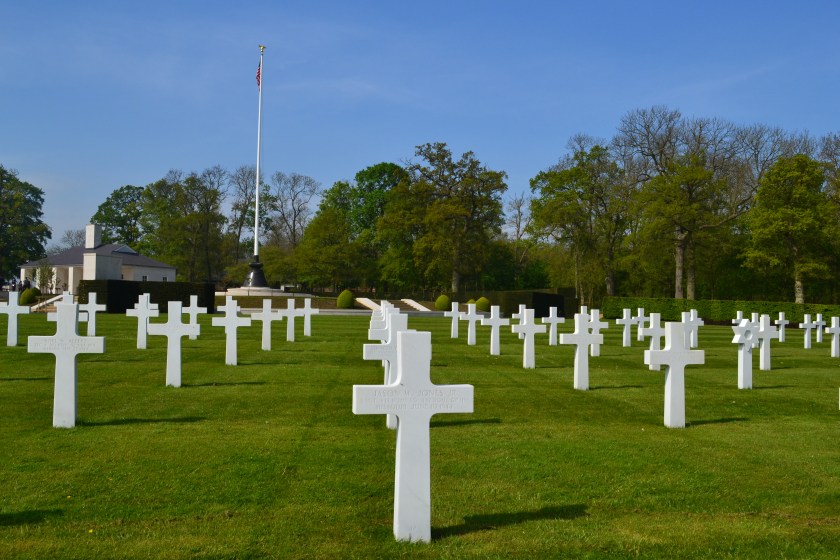
Whilst reading Donald L Millers book “Masters of the Air” based on the USAAF 8th air force and their part in the defeat of Nazi Germany, found a number of service men who were KIA and buried at Madingley American Cemetery. When I visited there in 2022 I was informed in the visitors centre that there were servicemen buried there who were mentioned in the book.

I revisited Madingley American Cemetery in April 2024 and found the graves of the following 4 service men:
2 Lt Mike Chaklos.
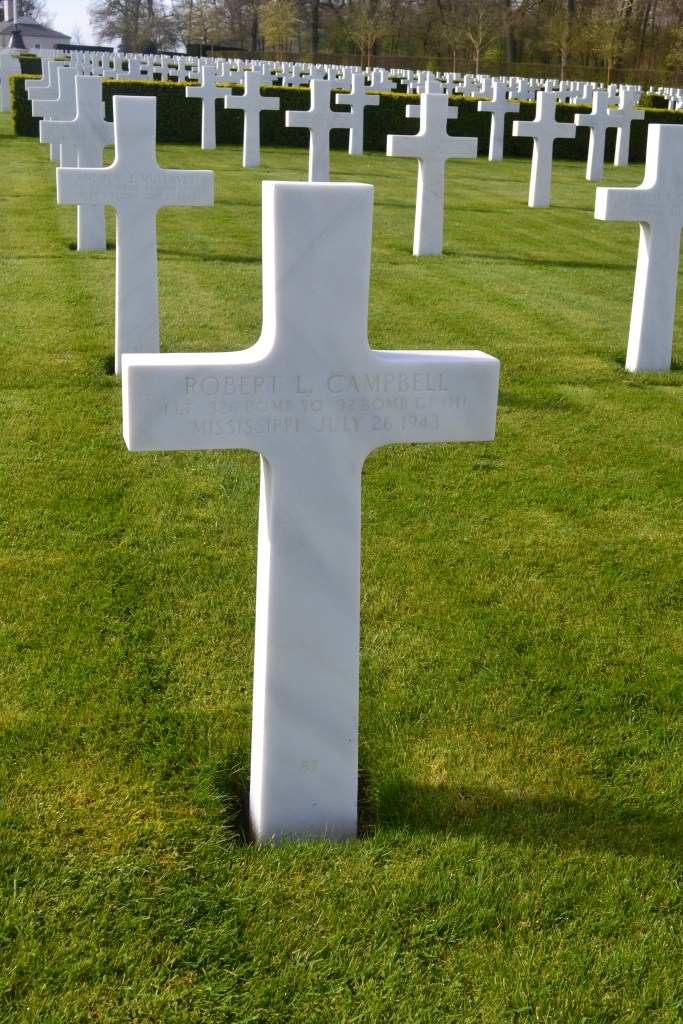
1 Lt Robert L Campbell.
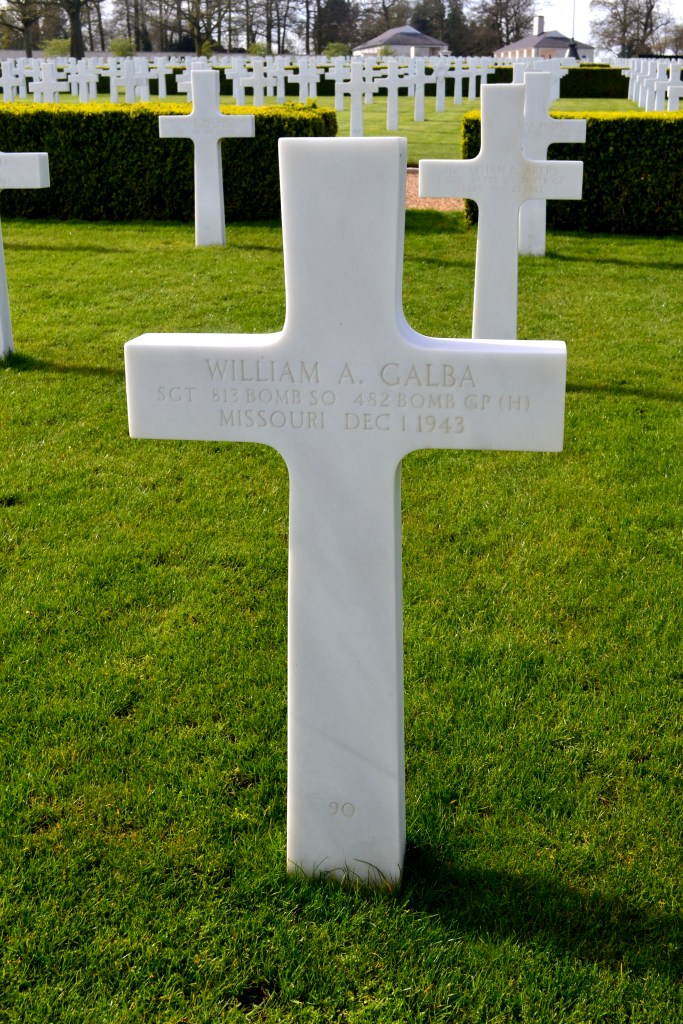
Sgt William A Galba.
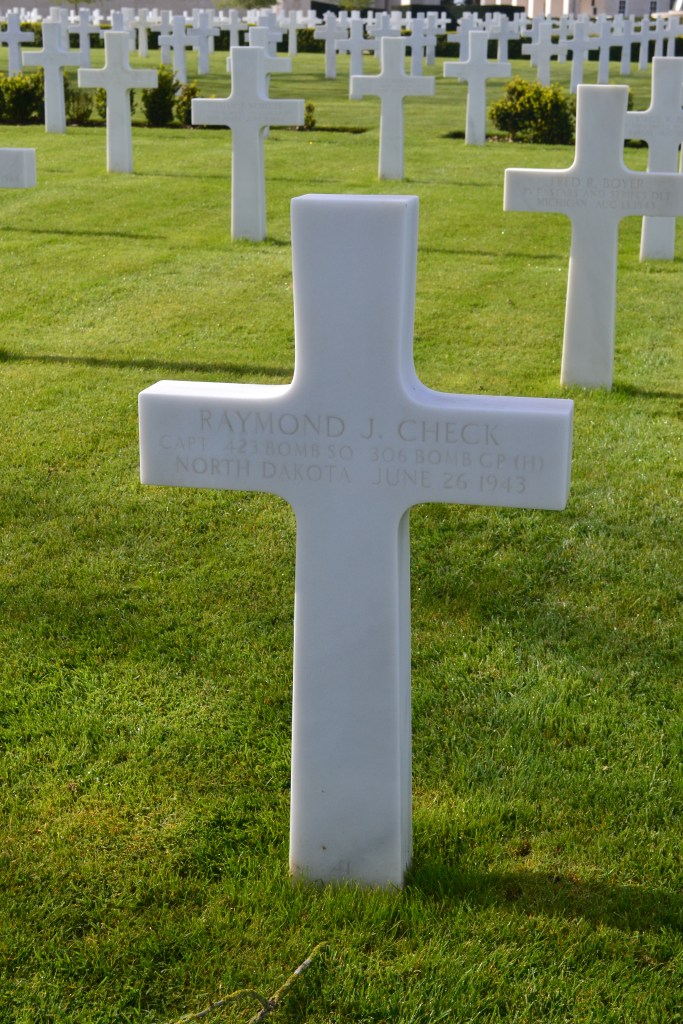
Capt Raymond J Check.

0-670001 2nd Lt Mike J Chaklos 388 BG 560 BS 5/1/1944. Mentioned at the end of the book as his grave was visited by his friend Eugene Carson before he left England for the States. “As i walked amongst the markers I silently cried my heart out”.

0-789368 1st Lt Robert L Campbell 326th BS 92BG 26/7/43. Mortally wounded by a 20mm cannon shell to the back of his head on a mission to Hanover. Campbells co-pilot Lt John “Red” Morgan took control of the plane and continued to the target whilst trying to keep Campbell alive, after dropping his bombs he returned safely to England. During the flight the top turret gunner Sgt Weaver lost an arm and the Navigator Lt Keith Koske managed to bandage the arm and attached a chute to Weaver and pushed him out of the plane hoping that the freezing temperature at high altitude would help stem the blood loss. Unfortunately Robert Campbell died not long after the plane made it back to an RAF airfield in Norfolk.
Sgt Weaver survived and was interred in Stalag 17B in Austria. Morgan was awarded the Congressional Medal of Honor but felt Lt Koske should have been awarded it instead.
37394801 Sgt William A Galba 482BG 813BS 1/12/43. Lack of Oxygen known as Anoxia was an ever present issue for airmen flying at high altitude. Calling on his intercom to see if anyone had been hit following an attack by enemy fighters, the Navigator got no reply from the B17’s tail gunner William Galba. Galba was found slumped over his gun not from wounds but lack of oxygen due to his disconnected oxygen tube. He was brought forward and laid out on the floor of the plane helped by the ball turret gunner William Moffat. The B17 by now was over the North Sea and had dropped to an altitude where masks could be removed. Unfortunately Sgt Galba couldn’t be revived and was interred at Madingley. Moffat visited the cemetery to place flowers on Galba’s grave as they were good buddies.
I’ve saved the worst till last. This is a tragic story.
0-435856 Capt Raymond J Check 423BS 306BG 26/6/43. 25th mission, a milk run over France, then on his return to England Raymond Checks fiancee a Nurse in the American Red Cross would be waiting for him in a Jeep at the end of the runway as they were getting married the next day. His mates had also planned a big party for him that evening. During the final seconds of the bomb run in B17 “Chennaults Pappy 111” the bombers endured a surprise attack by enemy fighters and Capt Check was hit in the throat by a 20mm exploding round which basically decapitated him. His co pilot Lt Col James W Wilson was badly burned by a fire in the cockpit and then exploding flares which had set alight due to enemy bullets raking the cockpit. Wilson tried to fly the B17 but was seriously injured so his friend Lt William Cassidy who was operating a waist gun had to help Wilson out of his seat and take control of the plane all the time sat next to the body of Capt Check. Some of the crew had bailed out but Cassidy managed to fly the plane back to England. The plane had no radio and no flares to be able to communicate with the tower at Thurleigh and Cassidy landed the plane in the opposite direction he should have with a tail wind as he didn’t want Check’s Fiancee to be there when he stopped the plane. In Cassidy’s words “She never saw him. Good thing”.
From the hand of an anonymous author:

“Oh do not let the Dead March play, O’er these at Madingley do stay, For they were young and old-style gay, Play their music of the day, Tunes of Dorsey, songs of Bing, Let them hear Glenn Millers swing, Then too the crosses well may sway, With those at Madingley do stay”.

N.B. this article was originally published by myself on the Broadsword Military Forum as 2 separate articles. “Masters of the Air” in the book review and “Masters of the Air and Madingley Cemetery” in UK military sites and memorials.
Tragedy Over Kettlebaston

(This article was first published on the Broadsword Military Forum July 2022).

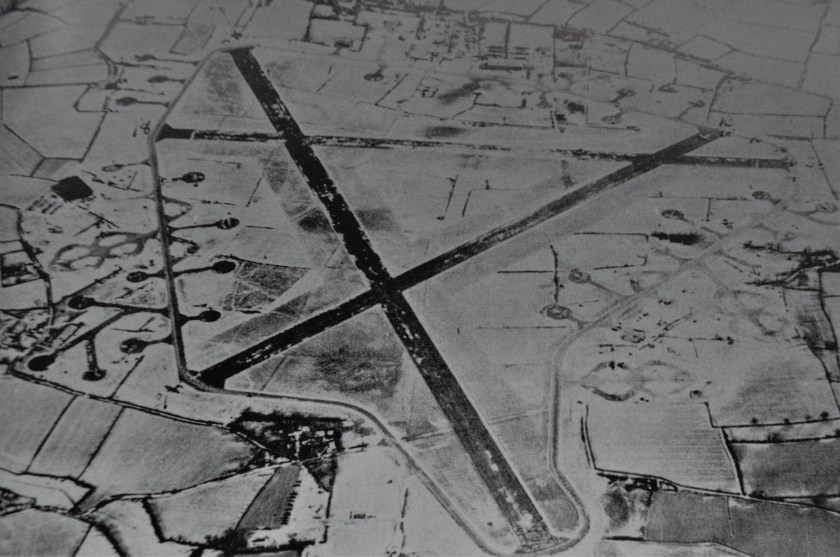
Located 3 miles east of Lavenham in Suffolk is the small village of Kettlebaston, just a few miles south of Rattlesden with both villages being south east of Bury St Edmunds. During the second world war RAF Rattlesden (Station 126) was built and occupied by the US Army Airforce 447th Bomb Group consisting of four bomb squadrons, 708th, 709th, 710th & 711th. The 447th was part of the 3rd Air Division flying B17’s and recognisable by its tail marking of the letter K in a square and had been at the airfield since December 1942 following its construction by George Wimpey & Co that same year. The 447th had been involved with bombing missions over Germany and occupied Europe. One such mission (No 152) planned for October 2nd 1944 was a primary target of an industrial armoured truck factory in Kassel, Germany. 458 B17s in total were dispatched by the 3rd AD to also include other industrial targets of opportunity at Wiesbaden and Gesecke.

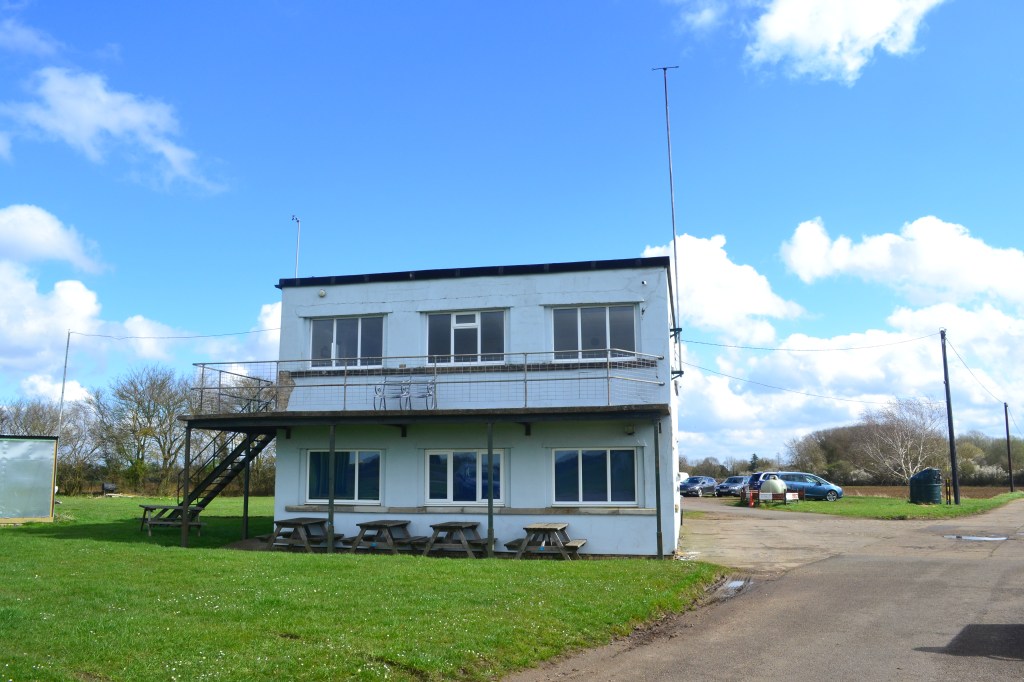
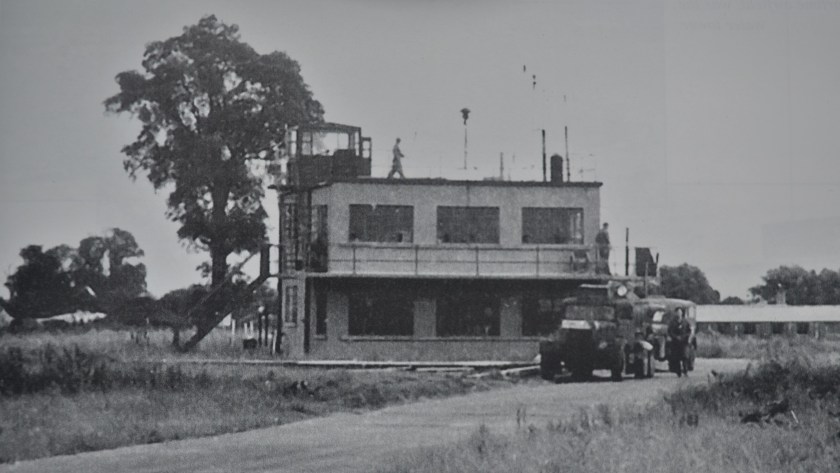
RAF Rattlesden Control Tower.

Following their briefing the crews would make their final checks 15 minutes before take off and would be at their stations in the aircraft and make final adjustments to any equipment. Take off would be at 30 second intervals and the aircraft would climb at a speed of 150mph, 400ft per minute. Assembly starting at around 500ft would consist of a V formation of 3 aircraft which would form into a squadron and finally assemble into a group. The basic principle was to form a combat box which would provide an all round defensive position for those defending the aircraft and also tighter grouping of bombs dropped. This assembly of the aircraft was fraught with danger especially that of a collision with other aircraft. Some of the crews said that this was the most perilous time when flying and felt safer once they were on their way even though they had Flak and the Luftwaffe to contend with once over the coast of mainland Europe!

Aerial view of the Airfield.

This is where this tragic story begins to unfold. A B17g of the 710th BS No 44-6460 was being piloted by 2nd Lt William M Wilder and was left wing man to Lt Eldon Henningsen who was right wing of a flight of 3. They were flying at 14,000 feet in formation and heading east towards the coast when Lt Henningson noticed a B17 off to his left nose diving towards the ground and then saw Wilder’s B17 start to bank away to the left with the tail section of a B17 stuck in the bomb bay. Wilder’s plane then began to nosedive towards the ground and disappeared from Henningsen’s site with no parachutes reported as opened.

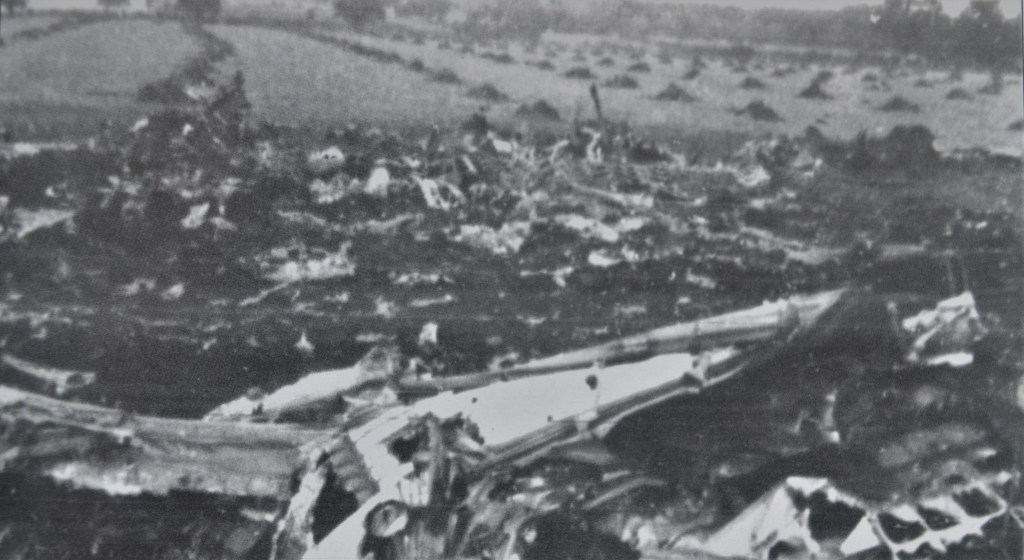
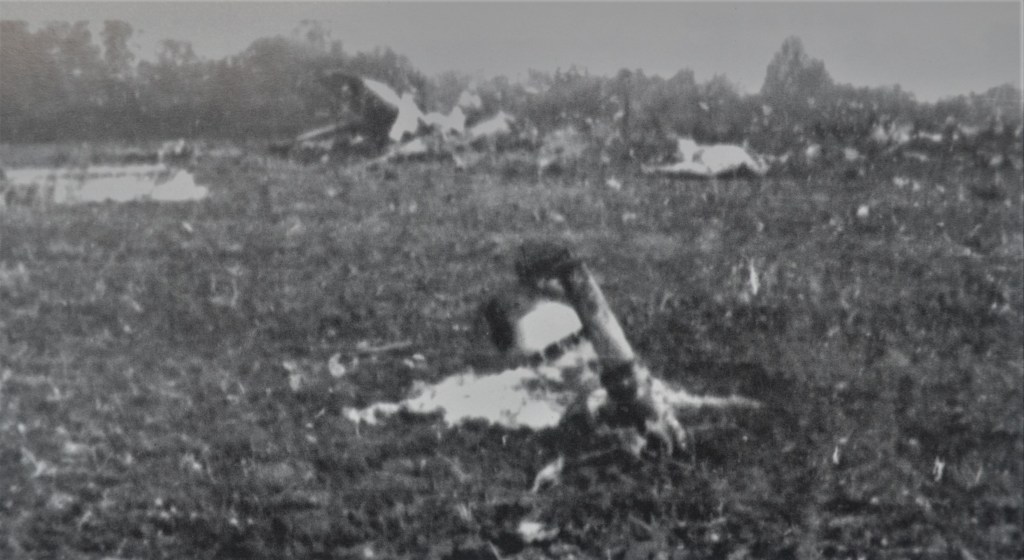
The first B17 that Lt Henningsen saw go down was B17g 43-38245 of the 711th Bomb squadron piloted by Capt Clifford T Leach. Capt Leach who was on his second tour of duty having already completed 25 missions on his first tour was climbing through cloud cover when his plane collided with the underneath of Lt Wilders B17. The propellers from 8245 sliced off the plexiglass of 6460 and realising something was wrong Capt Leach pushed the controls of 8245 forward only for the tail section to wedge itself in the bomb bay of Lt Wilders plane 6460. This resulted in the tail stabiliser section to snap off and plunge Capt Leach and his crew down towards the ground with no one being able to escape the doomed aircraft.

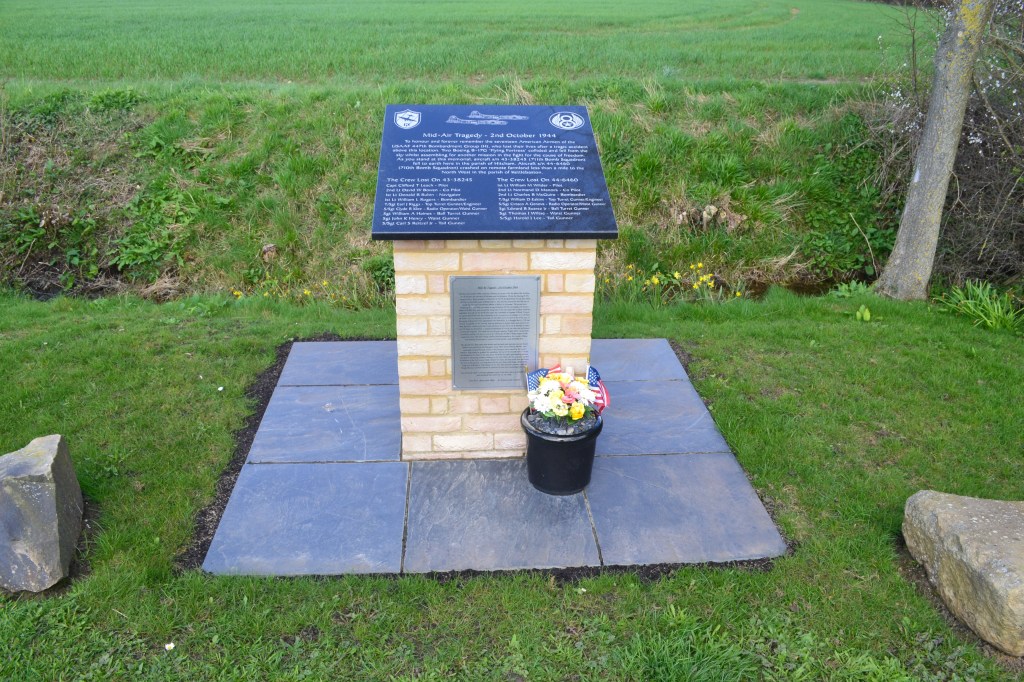
Leach’s B17g 43-38245 crashed at Wetherden Hall Farm, Hitcham with its tail section landing near to Kettlebaston Hall. Some reports say that the stabiliser was wedged into Wilders plane and as Leachs plan dropped forward the rest of the tail section was cut off by Wilders plane propellers.

8245 crash site at Wetherdon Hall Farm

Wilders B17g 44-6460 crashed at Treacles Farm (now demolished) with eight of the crew killed and one survivor. The navigator 2nd Lt Eliot G Mishler grabbed a chute and exited the plane via the missing front plexiglass nose, attaching the chute on the way down and successfully opening it! He suffered a broken ankle on landing and was assisted by two farm boys only for Mishler to throw himself on top of these boys when the ammunition from the crash started to explode. Wilder and the Bombardier 2nd Lt Charles B McQuire also escaped the aircraft but their chutes failed to open. 2nd Lt Mishler was sent home and survived the war. I believe he passed away a few years ago.

Crew Names.

Wilder Crew. 710th BS B17g 44-64602nd

Lt William M Wilder – Pilot

2nd Lt Norman B Manock – Co-Pilot*

2nd Lt Eliot G Mishler – Navigator (survived)

2nd Lt Charles B McQuire – Bombardier*

Sgt William D Eakins – Top Turret/Engineer

Sgt Ciriaco A Genova – Radio Operator

Sgt Eduard B Suarez jr – Ball Turret Gunner*

Sgt Thomas J Wiltze – Waist Gunner

S/Sgt Harold J Lee – Tail Gunner

Leach Crew 711th BS B17g 43-38245

Capt Clifford T Leach – Pilot

2nd Lt David W Bowen – Co-Pilot*

1st Lt Donald B Rubin – Navigator*

1st Lt William L Rogers – Bombardier

Sgt Earl L Riggs – Top Turret/Engineer

S/Sgt Clyde R Klee – Radio Operator*

Sgt William A Haines – Ball Turret Gunner*

Sgt John K Henry – Waist Gunner*

S/Sgt Carl S Reitsel – Tail Gunner (S/Sgt Reitsel had survived a previous crash on 43-38245 along with two others in April 1944 at Thorpe Morieux and suffered burns but returned to flying status. The rest of the crew perished in the crash).

  *Names of those buried at Madingley American Cemetery Cambridge England.

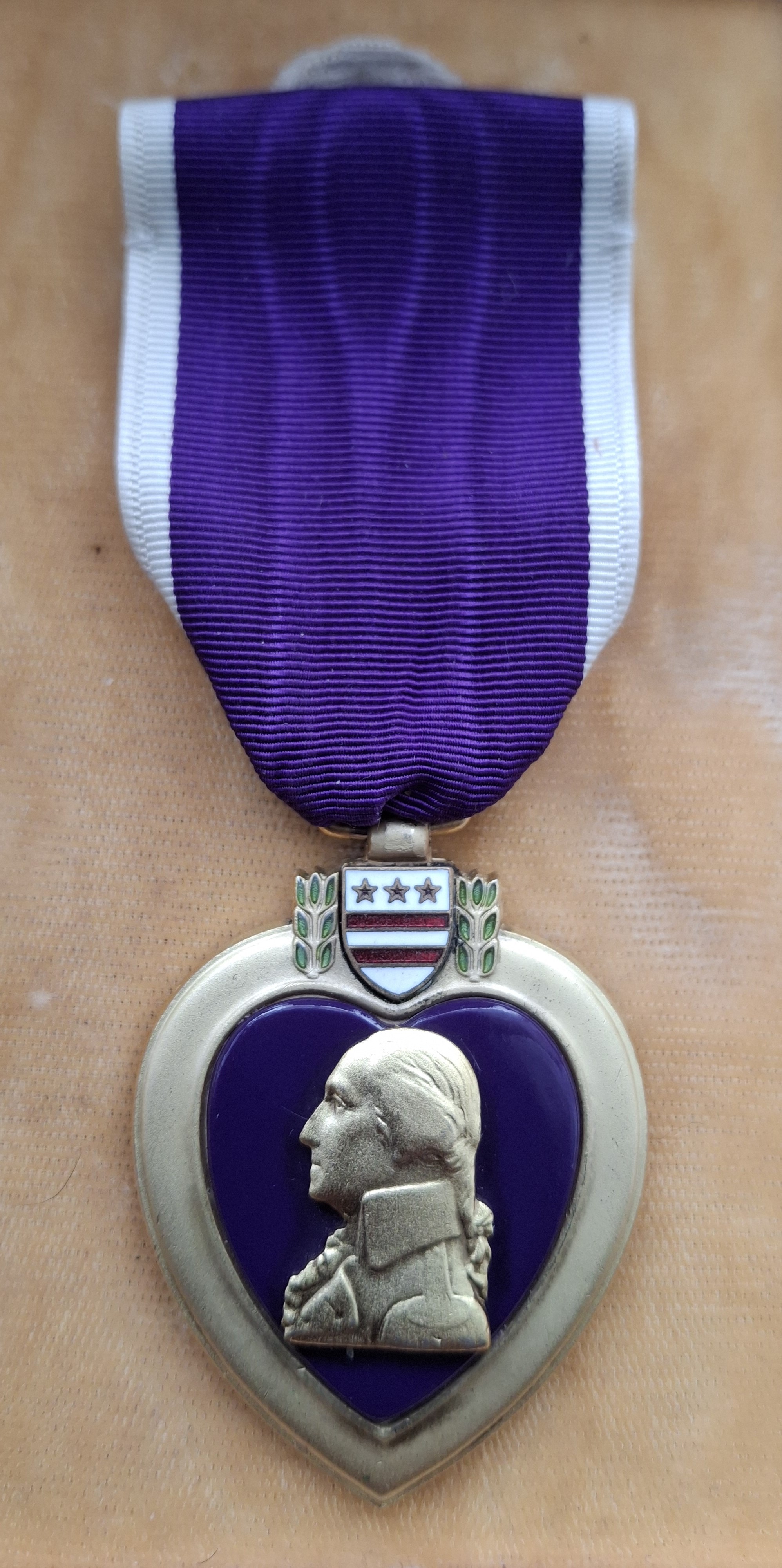
My interest in this tragic story stems from a purchase I made of a Purple Heart attributed to Harold J Lee Tail Gunner in B17g 44-6460.


I have done a certain amount of research and acquired an excellent book, “Pictorial Tribute to the men and aircraft of the 447th Bombardment Group (H) 1943-1945. Written by Derek Smith and published by East Anglia Books to whom I am indebted to Marilyn Bishop reference copyright of pictures.

Harold J Lee was born 4th January 1919, Oregon. Enlisted San Francisco, Ca, 13th Jan 1942. Army serial number 19065386. Originally in the Medical Admin Corp he then transferred to the US Army Air Corp. He was a resident of Butte County, California and his occupation was that of an Actor but this may be incorrect as his two older brothers were Doctor’s? His ethnicity was that of Chinese American and he was single with no dependants. His remains were interred originally at Madingley, Cambridge, England but in 1948 were returned to the United States for burial at Golden Gate National Cemetery, San Bruno, San Mateo County, Ca, 22nd July.

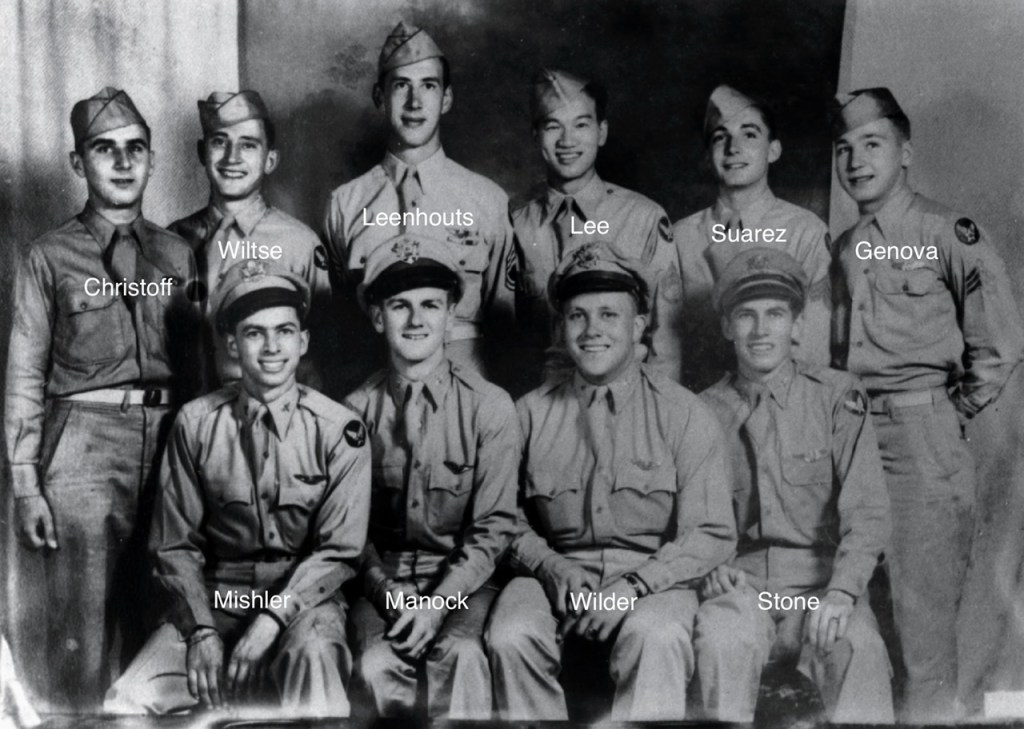
Harold J Lee is 3rd from the right back row in the picture of Wilder’s crew. First thing that strikes me is how happy they all look and how young they all are, Lee being just 25 when he died. Wilder is 2nd from the right and Manock the co-pilot is 2nd from the left front row. They all must have realised every time they climbed aboard that plane the dangers involved, yet they still did it and some even signed on for a second tour! Massive respect for not only these two crews that perished in this tragic accident but all those that volunteered for duty in the mighty 8th Air Force. The Wilder Crew picture above has 10 crew but this was reduced to 9 with the Radio Operator becoming a waist gunner when required.
From the names identified on the picture, Christoff, Leenhouts and Stone (who was injured during their second mission) were reassigned and replaced with Lt McGuire who replaced Stone and Sgt Eakins who replaced Leenhouts.
The crew arrived at Rattlesden 24th July 1944 and the 9 man crew flew their first combat mission 16th August. Mighty Eighth War Diary (Roger A Freeman) indicates that the 3rd AD sent 234 B17s to primary oil installation targets at Zeitz and Rositz south of Leipzig. With thanks to Kevin Harrington from North California for the updated Wilder crew picture.

There are eight graves at the American Cemetery at Madingley, Cambridge, England. These are some of the crew members of the B17’s that collided over Kettlebaston, October 2nd 1944. I visited Madingley, August 2022 to pay my respects.

My thanks again go to Marilyn Bishop of East Anglia Books of Stansted. Essex for assistance with some of the material above and also the staff at the American Cemetery, Madingley, Cambridge, England for their help in finding the graves.

Reference material I have used:

Pictorial Tribute to the men and aircraft of the 447th Bombardment Group (H) 1943-1945. Derek Smith and published 2006 by East Anglia Books, Stansted, Essex, CM24 8UZ.

The Mighty Eighth in the second world war by Graham Smith. 2001 published by Countryside Books, Newbury, Berkshire.

USAAF Handbook 1939-1945. Martin W Bowman 1997 Sutton Publishing Ltd, Phoenix Mill, Thrupp, Stroud, Gloucestershire GL5 2BU.

Mighty Eighth War Diary, Roger A Freeman, 1981, Janes Publishing Co Ltd, 238 City Road, London EC1 2PU.

Harold J Lee’s military information supplied by Daniel Griffin, Shomakersville, Pennsylvania. USA.

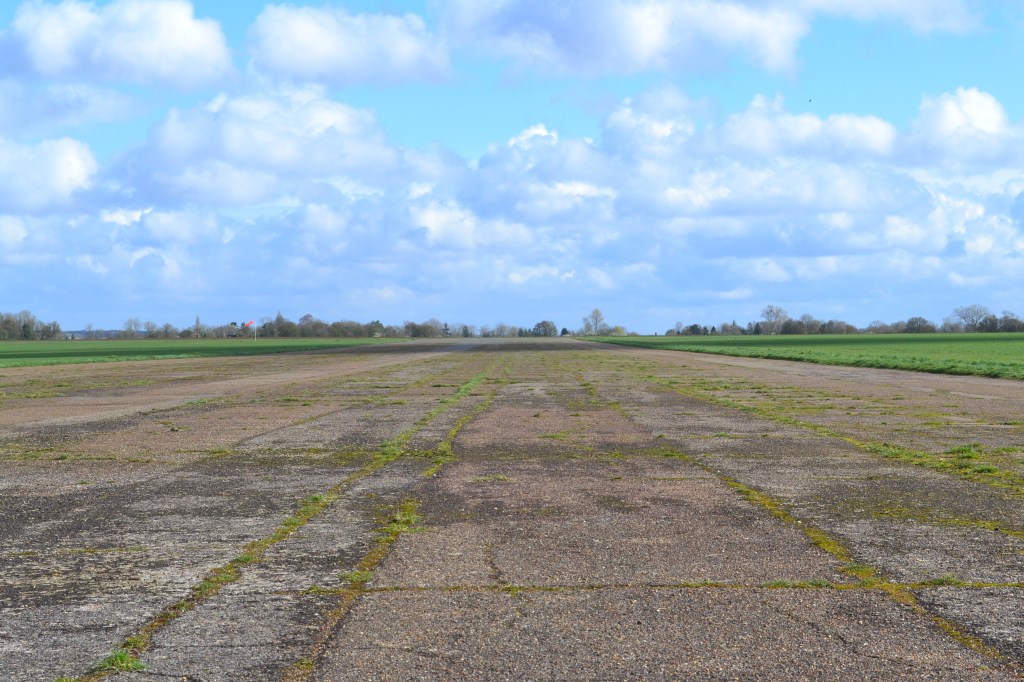
Update April 2024. I had the pleasure of a visit to Rattlesden Airfield in Suffolk whilst on vacation there end of March 2024 and was allowed to drive onto the runway and also visit the control tower which is run by the Rattlesden Glider Club. Charles Portway was an excellent host and I am indebted to him for showing me around the airfield and also the small museum they have in the control tower. I also visited the village of Kettlebaston to see the memorial to both aircrews at Wetherden Hall Farm.

A poem I have written in memory of the 447th and Rattlesden Airfield.

Not gone under the plough.

Upon the concrete runway once more, 

these wings now made to fly and soar, 

in silence they rise on a wire, 

training pilots to aspire, 

and years past the roar of engines four, 

taxi out for another tour, 

to deliver their payload on foreign land, 

some not to return cap in hand, 

Boeing’s might that flew from here, 

no longer have the sound of fear, 

but now a gliders wing cuts through, 

in the air above so blue, 

below empty buildings once at their best, 

some for storage some for rest, 

and did Major Miller once play his tunes, 

in the T2 hanger one assumes, 

to young men destined for history, 

with local girls a mystery, 

to those who stayed at Rattlesden, 

from across the pond now and then, 

with good intent from their shore,

they came to fight a noble war, 

a “Great Crusade” a General said, 

now these words understood and read, 

for those poor souls M I A, 

we still remember to this day, 

may God bless these men who came to serve, 

with honor, glory and no reserve, 

and for they that didn’t achieve their task, 

there are no questions we should ask, 

of their untimely misfortune, 

that took their lives far too soon, 

by the memorials that stand so tall, 

near to the perimeter gather us all, 

of people who can say a prayer, 

memories and grief to share, 

these times gone by as the control tower stands, 

a testament to many hands, 

that worked this field and did their best, 

to save us all from a dictators quest, 

with a lot of words written and said, 

of the Four Forty Seventh and their dead, 

lets not forget those that returned, 

to a homeland for which they yearned,

and remember when it was all over now, 

an airfield… not gone under the plough.

James Findon © 2025. (First Published September 5th 2025 447thBG association Facebook).